
Wandering Fighters
Regional or Cultural Fighting Styles

Fighters are one of the most versatile feeling classes in terms of possible inspiration. There has been so many Fighting styles throughout History across Earth, drawing on them to inspire how your Fighter engages is evocative and makes combat more enjoyable.
A system’s Fighter is one of it’s core classes so it should be fun and engaging to play. What is a Fighter supposed to go do while the Thief is off stealing and making criminal connections, the Priest is off praying and the Wizard is researching spells? Well they could be doing some sort of domain play, working on their Stronghold, raising an army or something like that. But that is expensive and doesn’t appeal to all players.
What if instead Fighters sought out other Fighters to Challenge or learn from? Meeting masters of other styles in combat or downtime is incredibly exciting. It has lead to some great roleplay in some of my games and the progression of learning new styles and learning techniques that were used against you in combat by other fighters is entertaining.
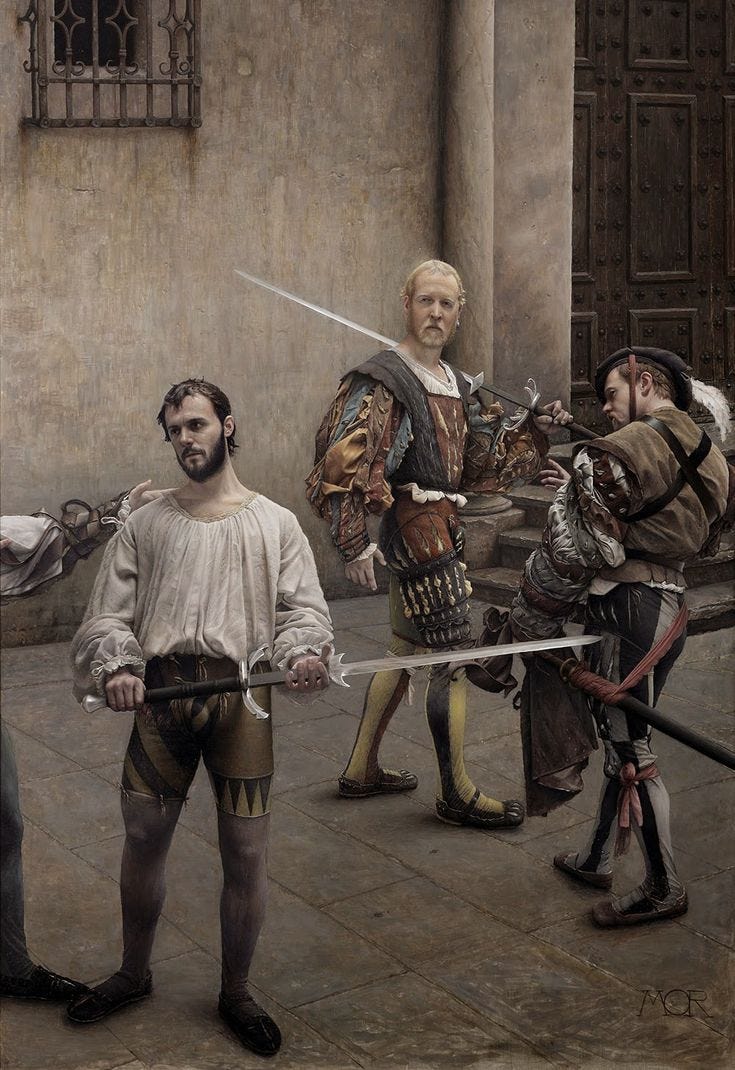
(Mikel Olazabal - "To Be Or Not To Be")
I was inspired by The Nothic’s Eye to adapt their Duelist’s Fighting Styles to make Fighters more interesting for my Shadowdark games. It’s a solid GLOG class that I really like and highly suggest you check out.
Stances and Techniques work like this:
You know one technique and one stance. You can be taught by Fighter Masters to learn new Techniques, Stances and Styles or research your own.
You can only do one Technique per round of combat. Stances are passive, at will, and have constant effects. You can only be in one stance at a time, but changing your stance can be done as at the start of the round. You can use Techniques against Intelligent combatants once per combat.
Fighters can attempt to do the stuff described in Techniques without using them but it won’t be as effective, especially for non-fighters. There’s a big debate in the OSR about whether or not to allow Fighters to have these Mighty Deed-esque abilities. I’ve gone back and forth on it with my opinions and I think its more fun for my table to use these rules.
I’d offer 5 Fighting Styles and 5 Techniques at first level to Fighters. If you want you could also require fighters to learn these things instead if you want to keep the class more basic out of the box.
Stances:
Defensive -
When in melee with a hostile creature if you have a shield, attack rolls that creature makes against characters other than you suffer disadvantage.
Slayer -
While wielding two-handed weapons reroll 1’s on the damage die. Must use the new number.
Dual-Wielder -
While dual-wielding gain advantage on the attack roll.
Panache -
Add Charisma modifier to your AC if unarmored, in addition gain +5 movement speed.
Rage-
You cannot do anything curative or cooperative, you have advantage on STR rolls not including attacks and disadvantage on INT rolls, when you make a STR attack you deal +2 additional damage, you are immune to fear and pain.
Techniques:
Final Word-
After successfully parrying an enemy’s attack or reducing an enemy to 0 HP you can verbally humiliate them with a cutting remark or utter a witty one-liner, if you do you regain 1d4 HP.
Shield Slam-
After a successful attack, you can immediately bash your opponent with your shield, dealing 1d4 blunt damage and forcing them back 5 feet.
Challenge -
Choose an enemy within 30 feet. If honorable they must pass a WIS Check (DC 12) or be forced to duel you until the duel is interfered with.
Cleave-
You can hit two enemies in a single two-handed weapon attack, if they attack roll hits spread the damage out between them however you choose to divide it.
Twin Parry-
If wielding two weapons and you are attacked twice simultaneously you can Parry both attacks with a single use of the parry ability.
That system by itself allows for customizable fighters. I would suggest that Regional Fighting Styles have one stance and 2-3 techniques to learn. Here are two examples of Regional Fighting Styles they could encounter and learn from:
Harodi, The Style of the Sword-Pilgrims:
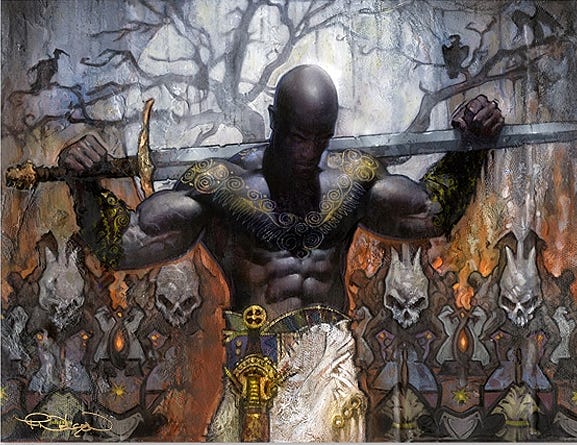
A style blending sacred ritual with fluid, whirling strikes. Practiced by warrior-monks, temple guardians, and devout duelists of The Haroi, it transforms combat into an act of reverence. Weapons are part of their religion. Each motion is both a prayer and a strike, a balance of devotion and destruction.
You might have learned it from a zealous warrior-priest, a secluded monastery, or in the sacred halls of a forgotten temple where warriors dance beneath incense-lit arches.
Stance: - Blessed Warrior
Add your Wisdom Bonus to damage rolls with Blessed Swords.
Technique: Divine Flourish – When an enemy misses you in melee, you may immediately reposition 10 feet and make a quick strike (no roll) for half damage.
Technique: Wind Cut – You make a sudden sweeping strike that arcs through the air like a gust of wind. If you hit by 5 or more, you can make a second attack against a different enemy within reach.
Riojan, The Style of Snakes and Daggers:
A ruthless and fluid dueling style from the Riojan Port Cities of Southern Maruvia, favored by assassins, pirates, and rogue duelists. The taming and wielding of snakes was learned by Maruvian's in the ports of the Sur' Hata who switch the rapier for a scimitar. Its practitioners wield parrying daggers, rapiers, sabers, and hidden weapons, often feinting drunkenness to mask their lethality. Some elite Riojan duelists even train serpents to strike from their sleeves at the perfect moment.
The Riojan Fencing style would likely be taught by drunken pirates, Sur'Hatan assassins, or fencing schools in the Riojan Ports.
Technique: Viper's Reflex- When an attack misses you may you have your trained snake bite the creature who attacked you using your to hit bonus.
Technique: Drunken Mirage- Your unpredictable footwork makes it hard to track your movements. If you take the Dodge action in combat, your Crit Range increases by +5 for an attack made during your next round.
Stance: Capa y Daga- While wielding a parrying dagger or cloak in your offhand you gain an extra Parry per combat.
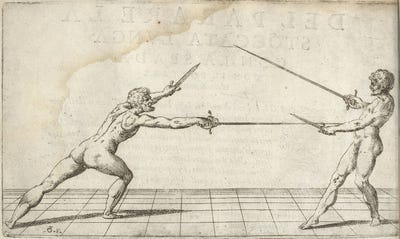
I think based off of those styles you can begin to imagine the NPCs and interactions your fighters might have with them. Some fighting styles could be magical, taught by Esoteric Knight Orders or Cults. They could also require Magic Items like Flaming Swords or Returning Throwing Knives.